Bob Joyce and the Elvis Theory
Is Bob Joyce Elvis Presley? This is the question behind one of the internet's longest-running mysteries. This page is a hub for Matt Savina's videos and commentary on the theory, with concert updates and music below. It presents a theory and the viewer's own comparison, not a proven claim.
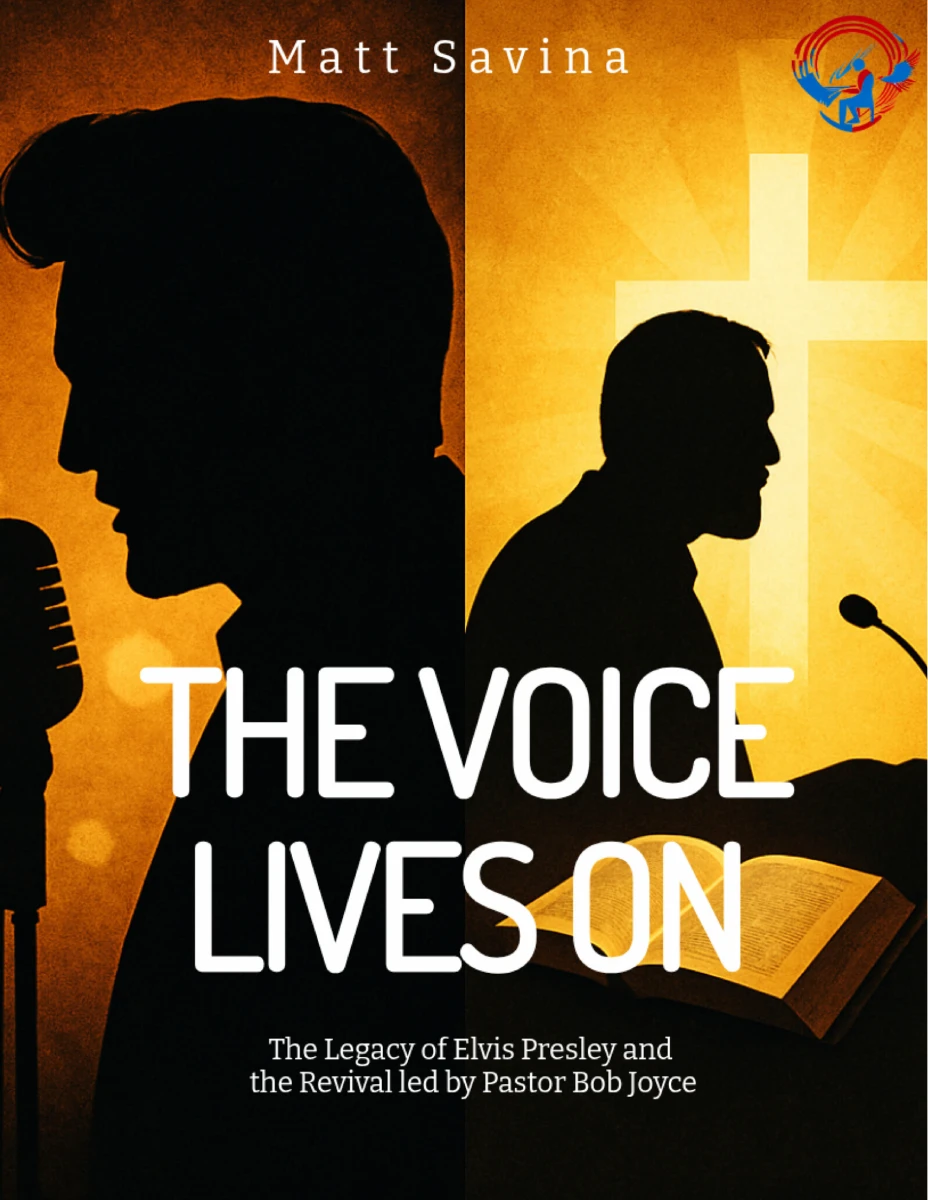
The Voice Lives On
The Legacy of Elvis Presley and the Revival led by Pastor Bob Joyce
A faith-centered look at the viral question behind the voice. It presents a theory and never claims proof.
Get the book on AmazonWhat Readers Say
From public Amazon reviews
"This book is an amazing spiritual journey! It is so wonderfully written. I can't imagine anyone reading it and not being touched by the heartfelt authenticity of it. Thank you Matt for sharing this amazing book with the world. Anyone who picks up this book will understand with such clarity Bob Joyce's journey."
"Matt Savina nailed it!! He speaks the truth, it really is about the True King...Jesus Christ!!"
Inside the Book
Read Chapter 1 Free
Chapter 1 - The Gospel Roots of Elvis Presley
Before the legend, before the leather suits and Las Vegas lights, Elvis Presley was simply a shy, sensitive boy from Tupelo, Mississippi. Born on January 8, 1935, to Vernon and Gladys Presley, Elvis entered the world under circumstances that would foreshadow a life marked by paradox and divine mystery. His identical twin brother, Jesse Garon Presley, was stillborn—a loss that left an invisible absence in Elvis's heart throughout his life. Some say Elvis felt he was living for both himself and the brother he never got to know, a burden and blessing that shaped his spiritual compass. The Presley family lived in poverty, but what they lacked in material wealth, they made up for in faith. Gladys, his beloved mother, was the emotional center of his world—a fiercely protective and God-fearing woman who sang hymns to her son and encouraged his tender spirit. She raised Elvis in the Assembly of God Church, where the sound of gospel music reverberated through wooden pews and hand-clapping congregations.
The Holy Spirit was not a distant theological concept—it was a present, powerful force that moved through song and tears, and Elvis felt it early and deeply. As a child, Elvis would sit wide-eyed in church, absorbing the harmonies and raw emotion of gospel choirs. He learned to sing by listening, mimicking the rich blend of Southern voices praising God with abandon. It was in this sacred space that Elvis first encountered his greatest lifelong passion: music. And that music, at its core, was gospel. In 1948, the Presley family moved to Memphis, Tennessee—a city that would become central to Elvis's transformation from humble boy to cultural icon. There, as a teenager, he immersed himself in the sounds of Beale Street, absorbing blues, rhythm and blues, country, and black gospel quartets. But even as his musical style broadened, his soul remained tethered to the songs of faith.
He was especially drawn to the Black gospel groups like The Soul Stirrers and The Statesmen Quartet, whose performances stirred the same spirit he had felt as a child in church. Elvis's breakout moment came in 1954 with the recording of "That's All Right" at Sun Records.
Elvis Presley, 1958
The world had discovered a voice that could shake the walls—but behind that rebellious energy was a man who still prayed before shows and kept a Bible on his nightstand. Despite becoming the most recognizable face on the planet by 1956, Elvis never lost his reverence for God. He often said, “All I want is to know the truth, to know and serve God,” a rare sentiment from someone drowning in fame.
Throughout his career, Elvis repeatedly returned to his spiritual roots. In 1960, just after returning from a two-year stint in the U.S. Army—where he served honorably in Germany—Elvis recorded his first full gospel album, His Hand in Mine. The album revealed a man deeply affected by his time away from home and more committed than ever to sharing his faith through music. His time in the Army had been transformative. While serving, he had mourned the death of his mother, Gladys, in 1958—a loss that devastated him. Her passing left a void that neither fame nor fortune could ll, and many believe it deepened his longing for spiritual meaning.
Backstage, he was known to gather his band and backup singers—often including gospel greats like J.D. Sumner and the Stamps Quartet—for all-night gospel sessions. These impromptu singalongs were moments of joy, intimacy, and worship, often lasting until sunrise. But the contrast between the Elvis onstage and the Elvis in private grew sharper as the years went on. Fame took its toll.
Elvis Presley and the Jordanaires, 1957
In 1967, Elvis recorded How Great Thou Art, a masterful blend of reverence and raw vocal power that earned him his first Grammy Award—not for rock, not for pop, but for gospel. A decade later, in 1972, he won another Grammy for He Touched Me, a collection of gospel songs that bore witness to his ongoing inner struggle between celebrity and sanctity. These albums weren’t industry decisions—they were personal declarations of belief. When he sang gospel, he wasn’t performing; he was testifying. Even in his live shows, particularly his Vegas performances in the early 1970s, Elvis would often close with gospel numbers or include sacred interludes mid-set, despite pressure from promoters to stick to the hits.
But the contrast between the Elvis onstage and The Elvis in private grew sharper as the years went on. Fame took its toll. He was isolated, heavily medicated, and increasingly disillusioned with the world of entertainment. Yet, even in his darkest moments, those close to him say he clung to God. He read spiritual books—some say obsessively—and he was fascinated by biblical prophecy and end-times teaching. He questioned his purpose, pondered eternity, and told friends he wanted to do something more meaningful with his life before it ended.
Elvis Presley (1973) RCA Records and Tapes
Then came August 16, 1977. The world was stunned. Elvis Presley was pronounced dead at Graceland at the age of 42. Of cial cause: heart failure. But almost immediately, questions arose. The body, some said, didn’t quite look like Elvis. Why was the name on the gravestone spelled "Aaron" instead of his of cial middle name "Aron"? Why had he reportedly spoken of faking his death in the months prior? How did someone so watched, so idolized, manage to vanish so neatly—without surveillance photos, hospital records, or conclusive answers? Some dismissed it all as fan-driven delusion. Others weren’t so sure. In the decades that followed, reports began to surface. Sightings. Voices. Men who looked and sounded too familiar. And among the most compelling modern gures at the center of this growing fascination is a humble pastor from Arkansas—Bob Joyce.
Screenshot from sermon at Household of Faith Church – Source: YouTube @PastorBobJoyce
A man with a thunderous, eerily recognizable voice. A man with a face that evokes memories of the King. A man with a passion not for concerts, but for Christ. As we’ll explore in coming chapters, the theories connecting Elvis Presley and Bob Joyce are more than just curiosity—they’re spiritual. They’ve inspired seekers to reconsider the power of redemption and the possibility that a man once broken by fame might have found new life, not as an icon, but as a servant of God.
Could the same voice that once lled stadiums now be lling a sanctuary with Scripture? Could Elvis’s deepest desire—to serve God before his time was up—have been quietly, miraculously ful lled? This journey doesn’t promise easy answers. But it begins with a simple truth: before Elvis was a king, he was a worshipper. And perhaps, in ways we have yet to fully understand, he still is.
Enjoyed the chapter? The full story continues in the book.
Get the book on AmazonAbout This Channel
Welcome to the Bob Joyce Channel
Pastor Bob Joyce's powerful gospel ministry and timeless worship music - concert moments, fan-favorite playlists, and the fascinating mystery fans love to explore. Watch it all right here on GRACE WAVE.
Latest Videos
Bob Joyce & the Elvis Mystery
YouTube
Fan Shorts
YouTube
The Soulful Revival: Baritone Grace
YouTube
TCB Updates
YouTube
Featured Book
The Voice Lives On
A book by Matt Savina
Explore the mystery, music and ministry of Pastor Bob Joyce through testimonies, reflections and cultural clues - a journey for fans, skeptics and seekers alike.
Get the BookOpens in a new tab - use your browser's back button to return to GRACE WAVE.
Frequently Asked Questions
Continue Exploring the Network
You're not leaving a channel — you're exploring a Network.